Villa Terra SoRAYA, DUBAI
Principal Architect | Dimitri Tsigos
Design Leader | Dafni Arnellou
Team Manager | Alexandra Giannakoula
Design Team | Charimadopoulou Evrydiki, Doumani Eirini, Hassani Fahimeh, Sidiropoulou Despoina
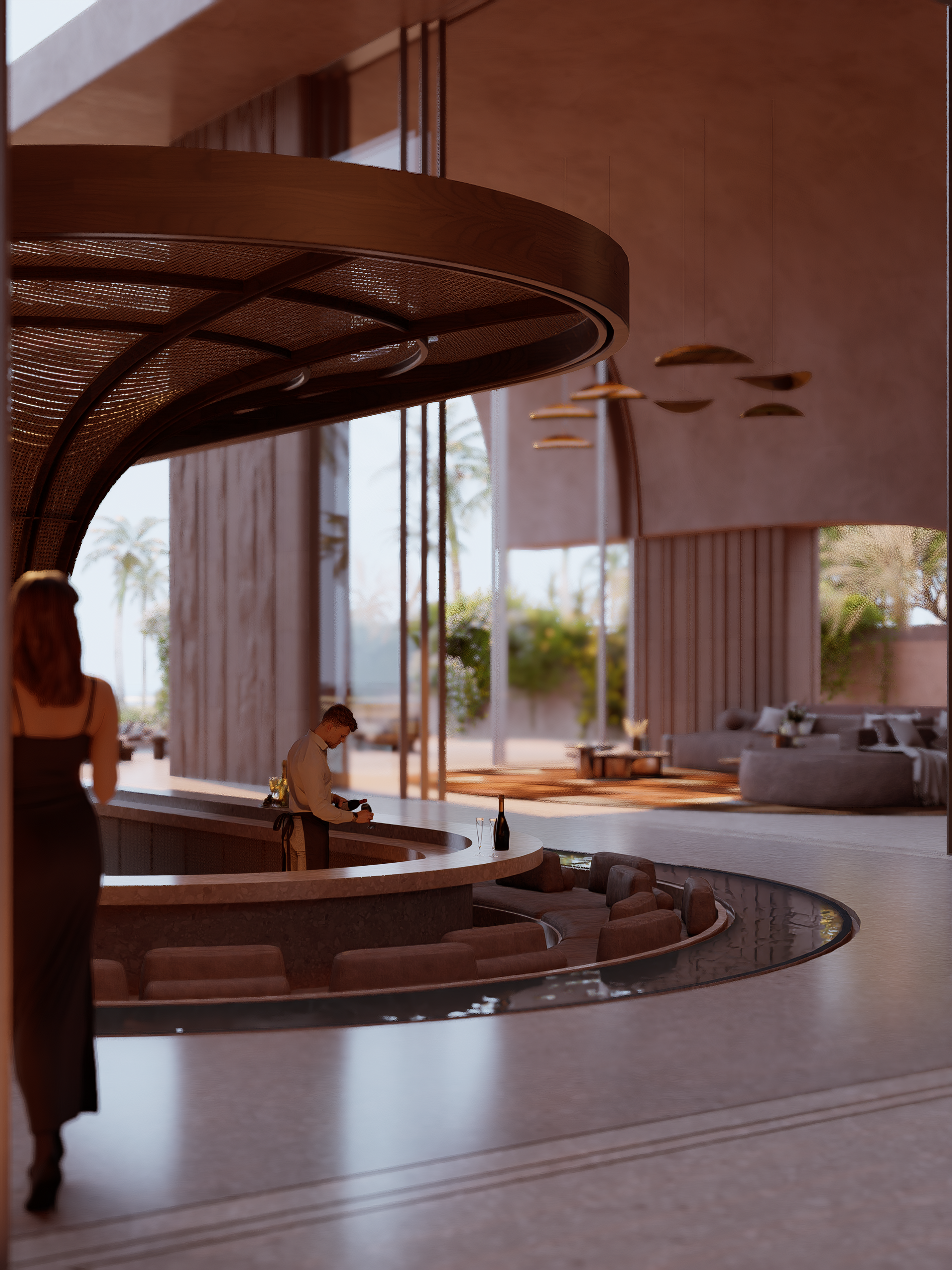
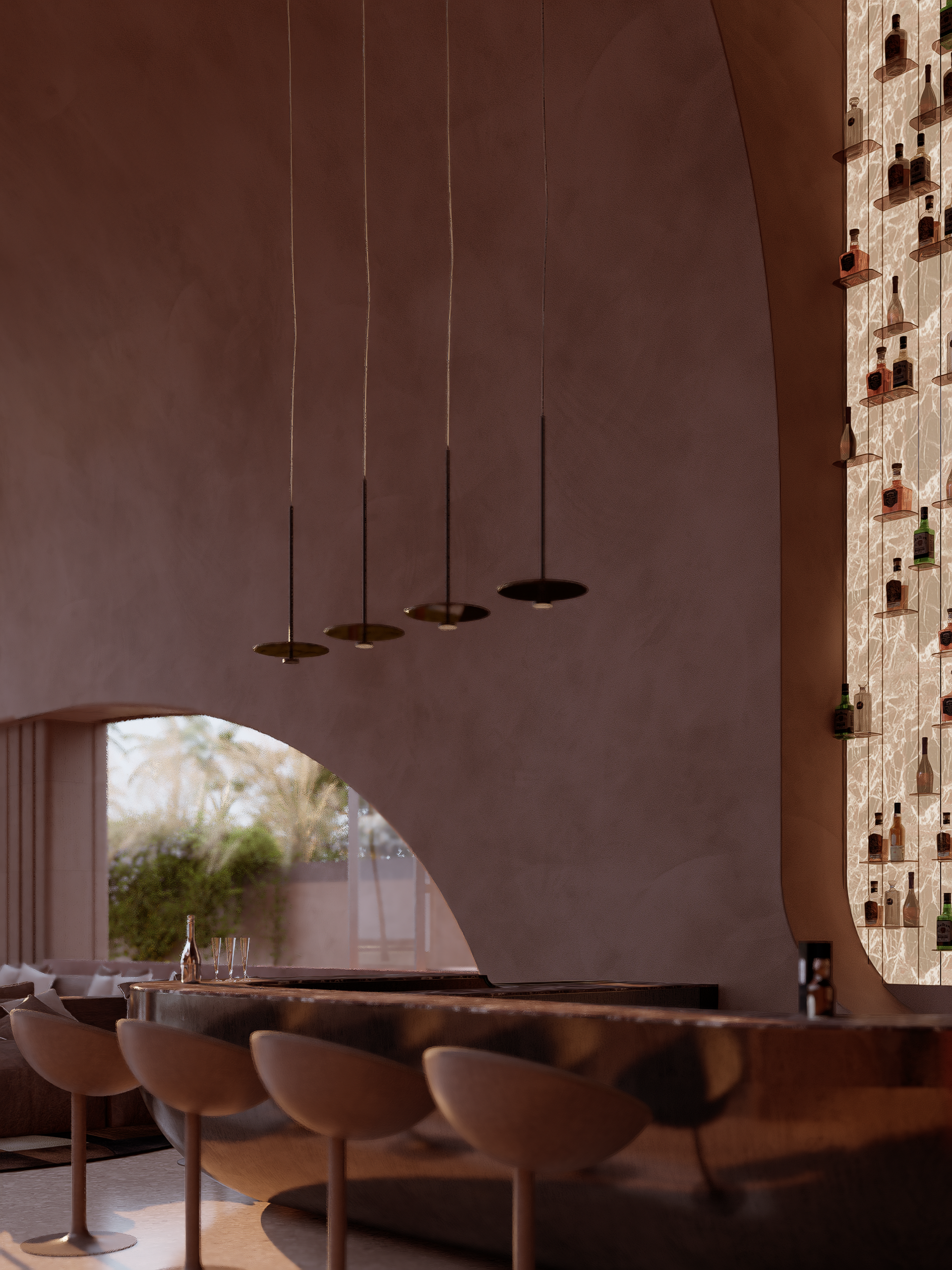
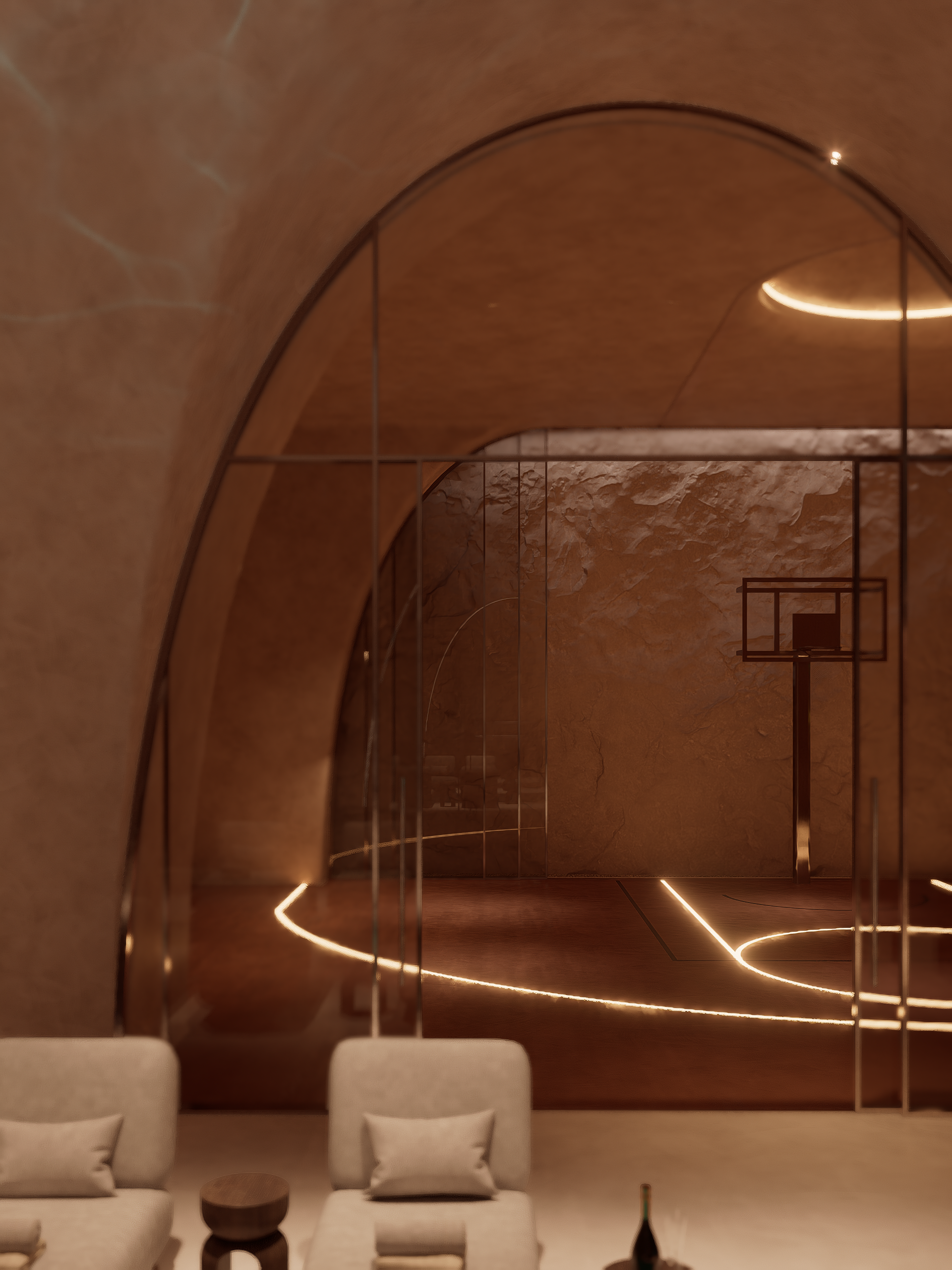
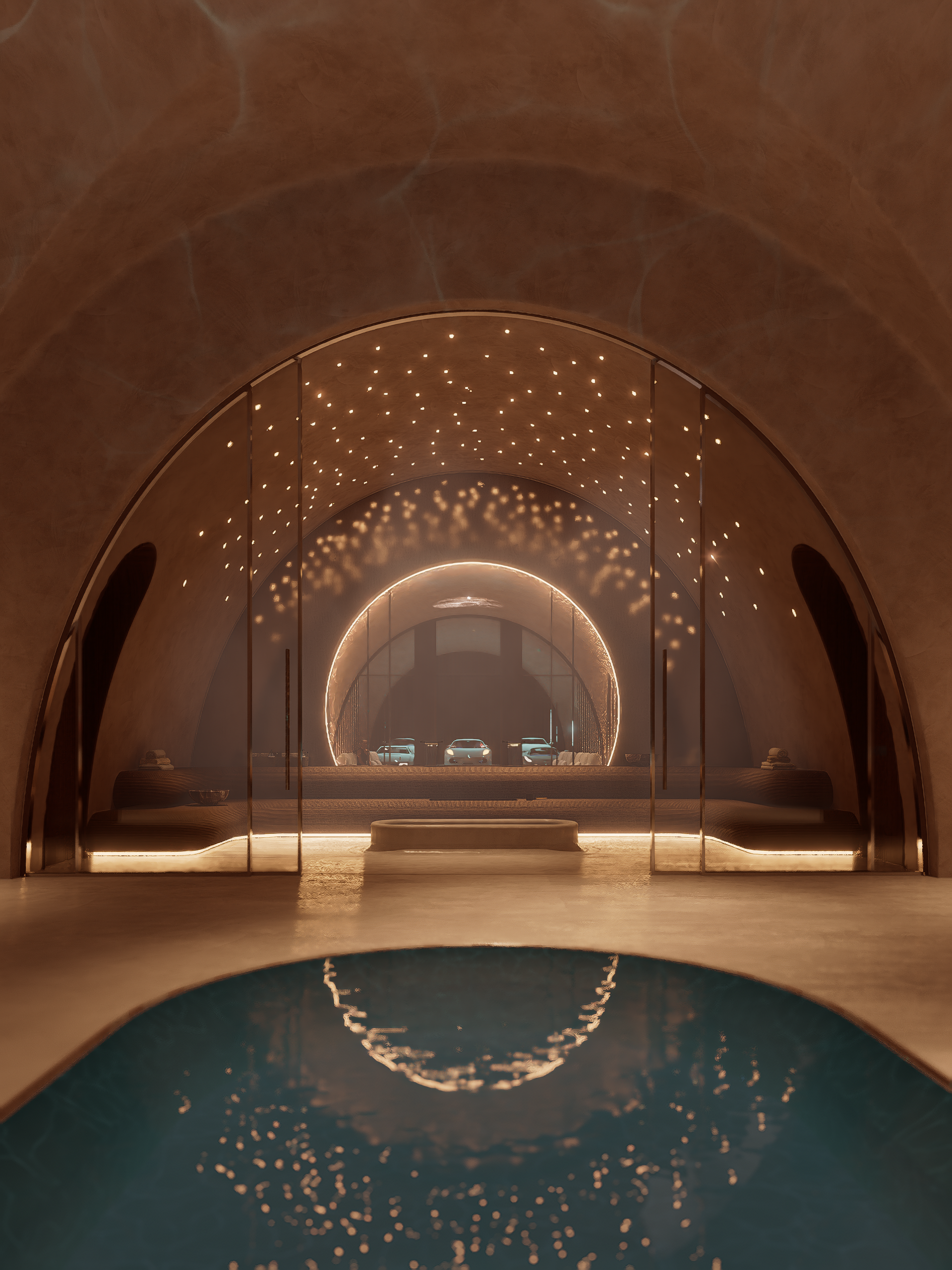
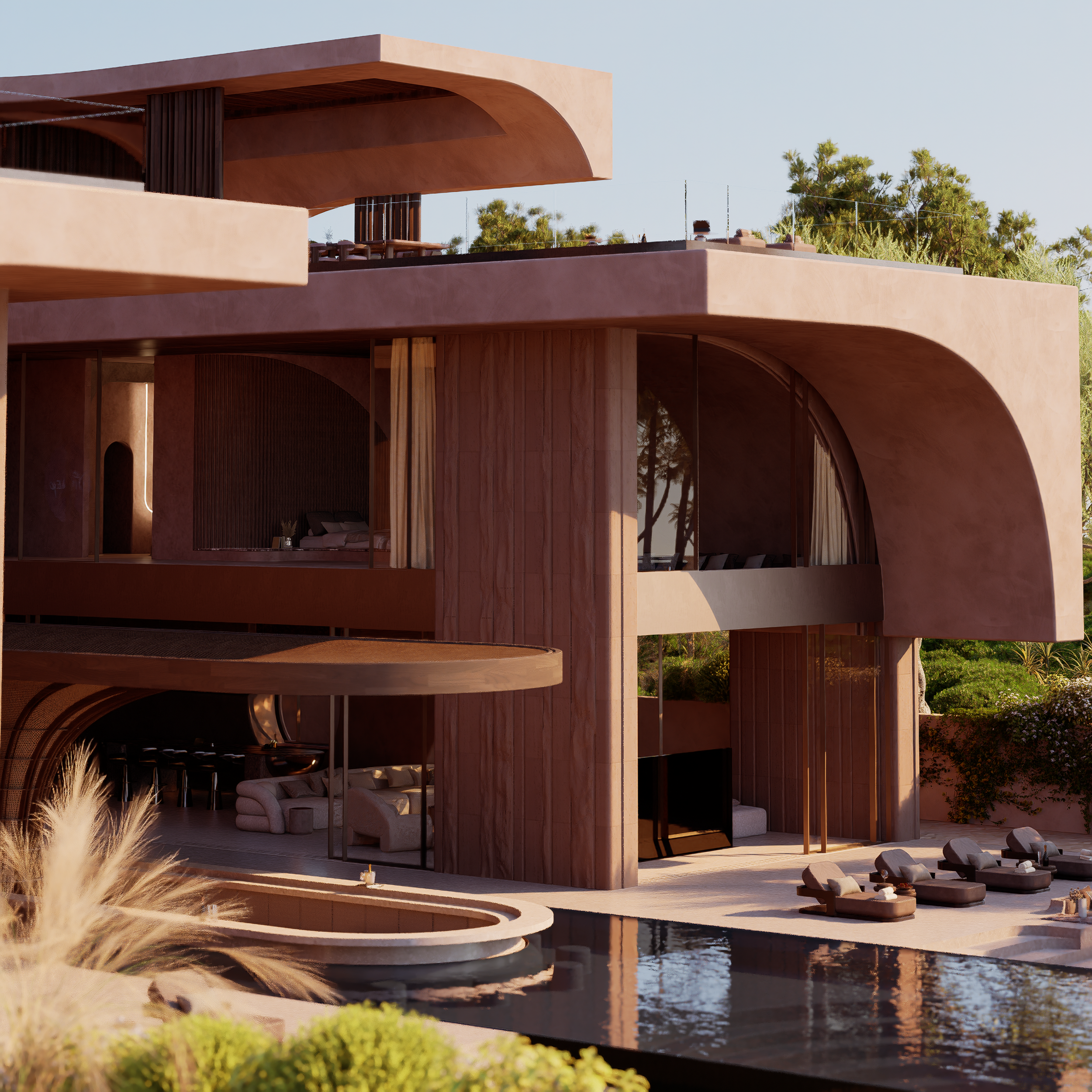
Terra Soraya’s geometric strategy is conceived as an act of sculpting. The design of the villa is not based on conventional additive processes. It originates from a pure, monolithic volume that is progressively shaped through a deliberate sequence of Boolean subtractions. Every architectural space is perceived and achieved through carving. Each subtraction simultaneously generates a pocket of human inhabitation. Architecture emerges as a process of excavation, where space, structure, and experience are revealed through the controlled removal of mass.
This subtractive logic extends seamlessly into the material language. Interpreting Terra Soraya as a jewel drawn from the earth, the villa adopts a terracotta-based palette that reinforces its sculpted genesis. Contemporary, innovatively developed terracotta tones are paired with Rosso Levante marble, vintage burgundy tiles, distressed brown leathers, and warm walnut wood. The result is a grounded, yet refined material composition, where geometry and texture amplify one another through depth, tactility, and warmth.
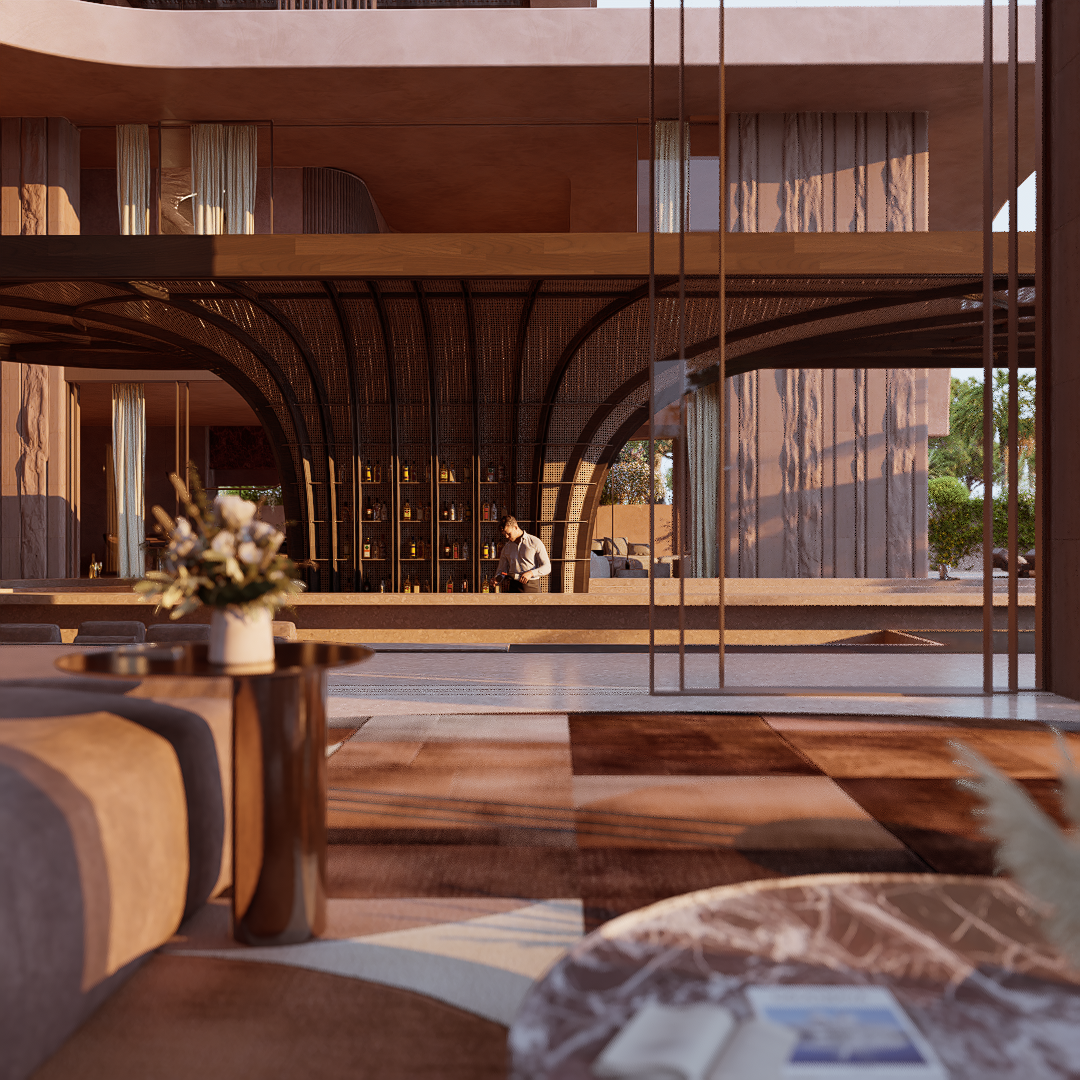
The spatial consequence of this sculpting process is a deliberately introverted architectural design. Living spaces are oriented towards the inner courtyard, instating it as the core of everyday life, rather than treating exterior space as a peripheral backdrop. Double-height openings strengthen the dialogue between interior and exterior, maintaining this continuity. The resulting inhabitation is calm and protected, defined by intimacy, spatial flow, and a strong sense of enclosure.
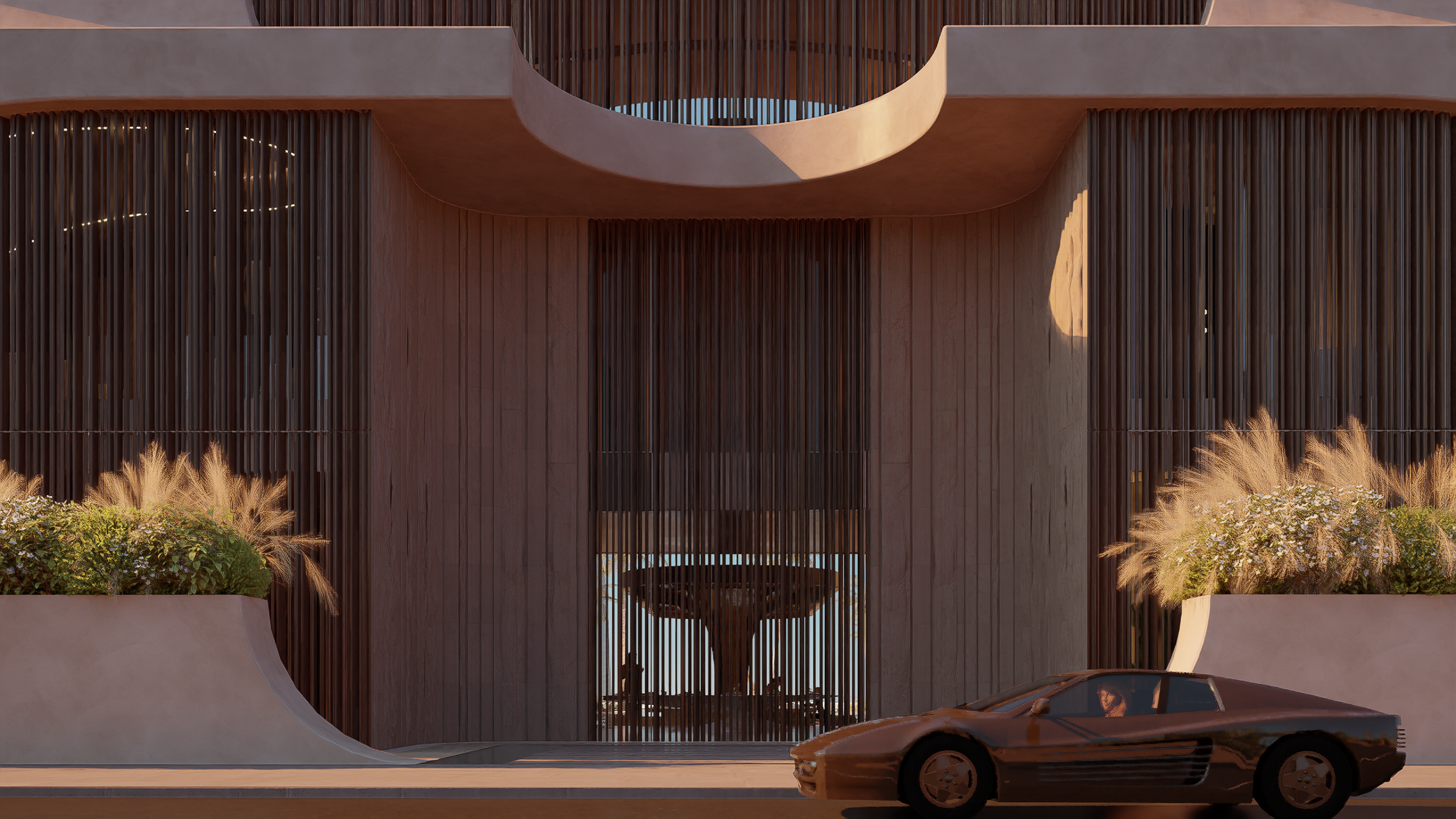
From the outside, the villa is perceived as a solid, sculpted mass, an architectural threshold that separates the public from private space. Crossing this boundary unfolds into a transition towards warmth, depth, and refuge. Terra Soraya ultimately presents itself as a contemporary sanctuary:
a house shaped from earth, where geometry, materiality, and inhabitation converge into a timeless architectural presence.